Do Truck Drivers Have to Speak English in 2026? FMCSA Rules Explained
Do truck drivers have to speak English in 2026? Yes. Federal regulations require CDL drivers to read road signs, respond to law enforcement, and complete reports in English. Here is what the FMCSA rule actually says and what it means for new and experienced drivers.
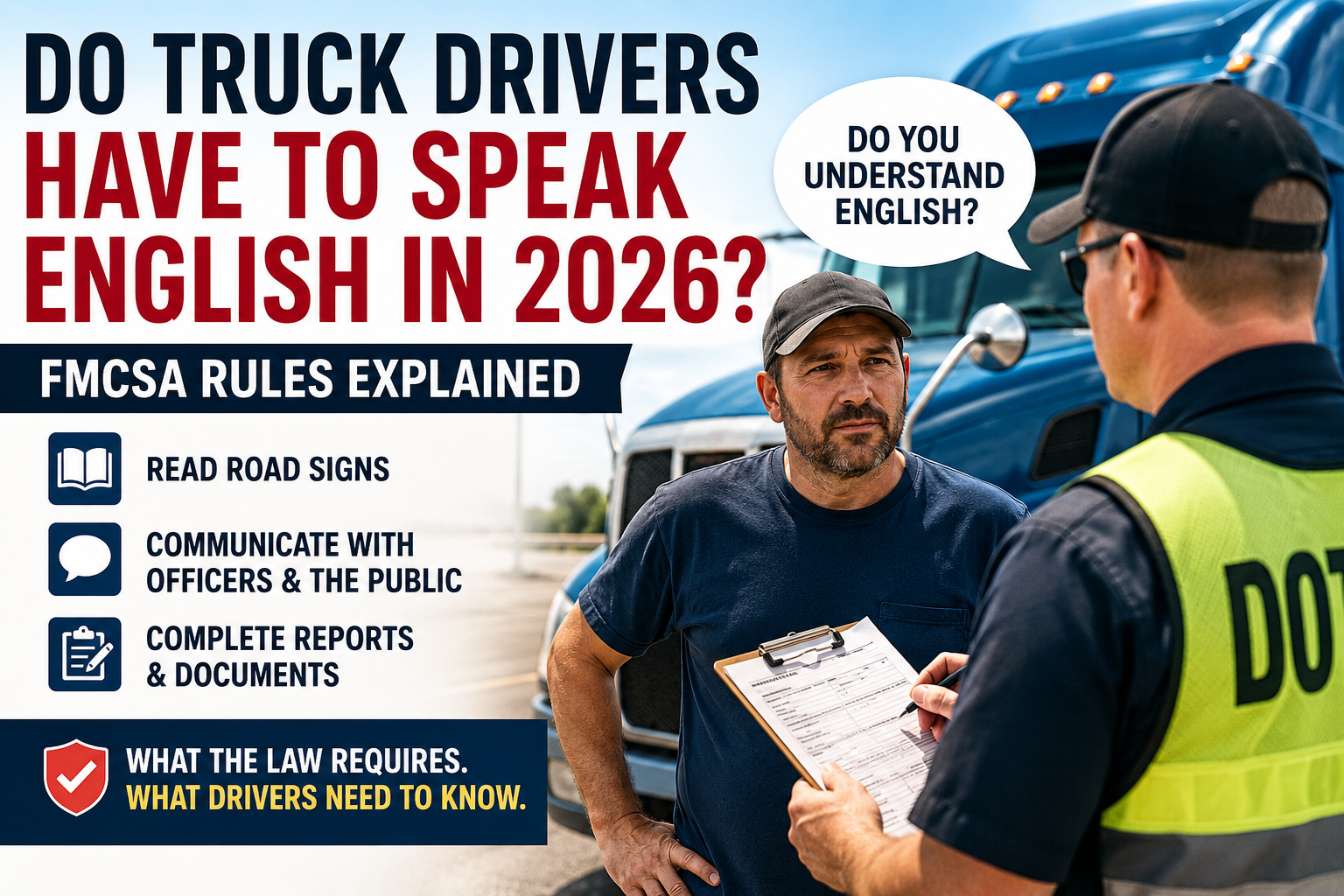
Do Truck Drivers Have to Speak English in 2026? FMCSA Rules Explained
If you have been following trucking news lately, you may have seen headlines claiming that drivers who cannot speak English could be taken off the road.
That raises a fair question.
Do truck drivers actually have to speak English in 2026?
The short answer is yes.
This is not a brand-new law. Federal regulations have required commercial drivers to understand and communicate in English for decades. What changes from time to time is how strictly the rule is enforced.
If you are considering a trucking career or already hold a CDL, here is what you need to know.
What the FMCSA Rule Says
The requirement is found in federal regulation 49 CFR §391.11.
To operate a commercial motor vehicle in interstate commerce, a driver must be able to:
- Read and speak the English language sufficiently to converse with the general public
- Understand highway traffic signs and signals in English
- Respond to official questions
- Make entries on reports and records
In plain English, you do not need perfect grammar or an advanced vocabulary.
You do need to understand instructions, read signs, and communicate clearly enough to do the job safely.
What Drivers Must Be Able to Do
A commercial driver should be able to:
- Read road signs and construction warnings
- Understand DOT inspection instructions
- Communicate with law enforcement officers
- Fill out shipping and inspection paperwork
- Read company messages and safety notices
If you can handle those tasks in English, you meet the practical requirement.
Can a Driver Be Put Out of Service?
Yes.
If an enforcement officer determines that a driver cannot communicate sufficiently in English, the driver may be cited and, in some situations, placed out of service until the issue is corrected.
That means the truck stays parked while dispatch starts asking uncomfortable questions.
Is This a New Law?
No.
The English proficiency requirement has existed for decades.
What is new in 2026 is the increased attention and public discussion around enforcement.
Whenever enforcement priorities change, search traffic spikes and social media fills with rumors, half-truths, and people confidently explaining regulations they have never read. A proud internet tradition.
Common Misunderstandings
You Must Speak Perfect English
False.
Drivers do not need to sound like a news anchor. They only need to communicate effectively enough to perform the job safely.
This Rule Only Applies to New Drivers
False.
The rule applies to all CDL drivers operating in interstate commerce.
The Requirement Was Created in 2026
False.
The regulation has been in place for many years.
What This Means for New Drivers
If you are thinking about getting your CDL and you can:
- Read road signs
- Understand instructions
- Talk with officers and customers
- Complete basic paperwork
you should be fine.
Most drivers who can comfortably read and communicate in everyday English will have no issue meeting the requirement.
Final Thoughts
Yes, truck drivers must be able to read, write, and speak English well enough to safely perform their job.
This is not a new rule, but it remains an important federal requirement.
If you are preparing to enter the industry, focus on learning the regulations, understanding the job, and building solid communication skills. Those basics will carry you much farther than social media rumors ever will.